Your CRM has a graveyard in it. Leads who filled out a form, answered one call, then went quiet while your team moved on to fresher names. Nobody buried them officially. They just stopped getting contacted.
Most businesses are sitting on hundreds, sometimes thousands, of prospects exactly like this. They weren’t bad leads. The follow-up broke down.
AI SMS marketing changes the math on this problem. Instead of one-size-fits-all text blasts, AI-powered SMS holds personalized, two-way conversations with each lead based on their history, behavior, and timing — at scale, automatically, without a rep dialing through a list. It reads replies. It continues the conversation. It hands off to your sales team when a prospect is ready to close.
This article covers what AI SMS marketing actually is, why SMS outperforms every other channel on attention, and the five ways it directly converts cold pipeline into closed deals.
What Is AI SMS Marketing?
AI SMS marketing is the practice of using artificial intelligence, specifically machine learning and natural language processing, to send personalized, behaviorally-timed text messages that have real conversations with prospects at scale. No blasts. No scripts. Actual back-and-forth that converts.
Here’s what changes when you use it right.
How It Differs from Traditional SMS Blasts
Old-school SMS marketing is a megaphone. You write one message, send it to 5,000 contacts, and hope the 3% who respond justify the other 4,850 who either ignore it or unsubscribe.
AI SMS marketing is a conversation. The system reads each lead’s history, purchase behavior, and interaction data, then decides what to say, when to say it, and how to say it. Two leads who bought the same product two years ago might get completely different messages based on what they did (or didn’t do) since then.
That’s not a marketing strategy. It’s a sales rep who never sleeps and never forgets a detail.
The Technology Behind It
Three core systems power this:
- Machine learning algorithms that analyze lead data and predict optimal actions.
- Natural language processing that lets the AI read and write like a person rather than a script.
- Real-time data integration that pulls context from your CRM on every send.
These don’t operate in sequence. They run simultaneously on every conversation, adjusting as replies come in.
Why SMS Is the Highest-Attention Channel in Marketing
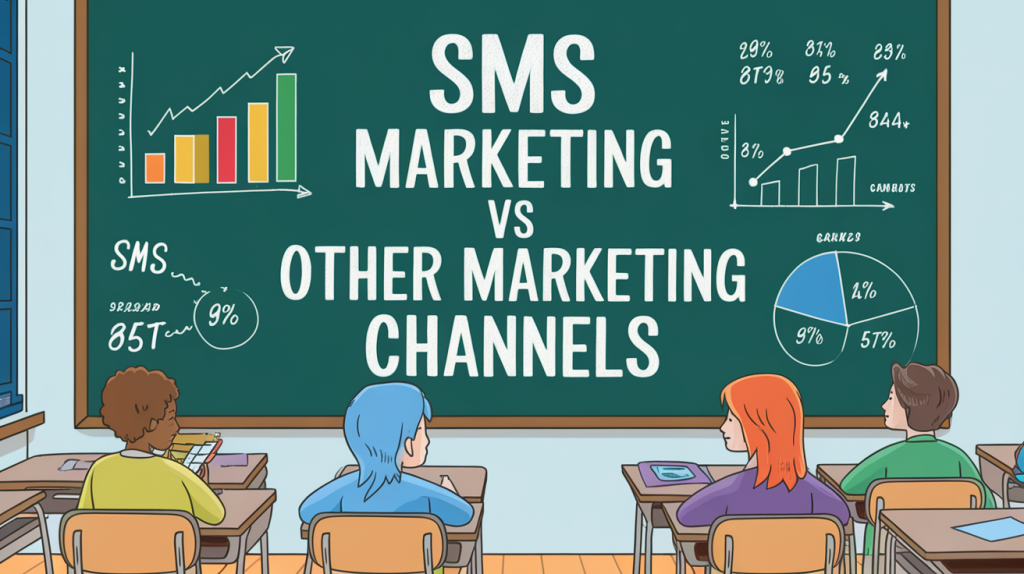
Email has a 20% open rate on a good day. SMS sits at 98%, with 90% of texts read within three minutes of receipt.
That’s not a marginal difference. That’s a different medium.
The personal nature of SMS plays a big role. A text message lands in the same place as a message from a family member. It gets the same immediate attention reflex. Email sits in an inbox people batch-process twice a day. SMS interrupts.
Most businesses treat this channel like a broadcast tool and burn through it. AI makes it worth the attention it gets, because what the lead receives feels relevant to them specifically, not like another marketing blast they got auto-enrolled into.
5 Ways AI SMS Marketing Can Directly Improve Your Sales
1. It Revives Cold and Dead Leads Automatically
Your CRM isn’t a database. It’s a waiting room full of people who were interested once and never heard from you again at the right moment.
AI SMS can work through that list systematically. It sends a message, reads the reply, continues the conversation, and flags warm prospects for your sales team. No rep needed for the first five exchanges. The AI handles all of it.
The timing matters as much as the message. A lead who went cold six months ago isn’t the same person they were when they first opted in. AI identifies behavioral signals that suggest re-engagement potential and triggers outreach accordingly. Not every lead gets the same re-activation message. Some get a direct offer. Some get a question. Some get a piece of content that re-establishes relevance before any ask is made.
This is JARVIS’s flagship use case. A performance-based model means you only pay when the conversation converts.
2. Personalization That Doesn’t Feel Automated
There’s a specific kind of cringe that happens when you get a “personalized” message that uses your first name and the wrong product. It’s worse than a generic message. At least a generic message doesn’t try to pretend.
Advanced AI avoids this by building context before sending. It pulls prior purchase history, past conversations, browsing behavior, and CRM data to write a message that actually reflects where that lead is in their relationship with your business.
The difference in response rate is stark. A generic re-engagement blast averages 2-5% response. A contextually accurate AI-driven follow-up can hit 20-30% because it doesn’t feel like a blast. It feels like someone remembered.
3. Reaching Leads When They’re Most Likely to Respond
Manual follow-up schedules are built around rep availability. Calls go out at 10am because that’s when the team is fresh, not because 10am works for the lead.
AI works backwards. It analyzes response data across thousands of interactions and identifies the time windows where each lead segment is most likely to engage. B2B leads might respond best mid-morning on Tuesday. A consumer segment might peak on Friday evenings. The system adjusts automatically.
This sounds small. The compounding effect on response rates is not.
4. Automated Follow-Up That Never Drops the Ball
The biggest leak in most sales processes isn’t the pitch. It’s the fifth follow-up that never happened because the rep had 80 other things to do.
AI SMS runs the full sequence regardless of how busy the team is. It recognizes returning customers, references previous conversations, and moves each lead to the appropriate next step based on their reply. A lead who says “maybe next month” gets a calendar-aware follow-up on exactly the right date. One who says “send me more info” gets relevant content and a check-in 48 hours later.
The sequence doesn’t break because someone forgot to set a reminder. The sequence doesn’t exist in a spreadsheet someone hasn’t opened in three weeks. It runs.
5. Real-Time Conversation Tracking and Revenue Visibility
Gut feel isn’t a reporting strategy.
Integration with CRMs like GoHighLevel gives you full visibility into every active conversation: which messages triggered replies, which leads are warming up, which sequences are underperforming, and where in the funnel each prospect sits at any given moment.
This matters for two reasons. First, your sales team knows exactly who to call and when, because the AI has already done the qualification work. Second, you can see which messages are driving results and adjust campaigns before they run their full course. Not six weeks later when the campaign is done. Now.
What Makes AI SMS Marketing Different from a Regular Chatbot

The short version: a chatbot is a flowchart. AI SMS is a reader.
Basic chatbots respond to keywords with pre-written branches. If the user says “yes,” go to branch A. If they say “no,” go to branch B. If they say anything else, send the fallback message that makes it obvious no one is actually there.
AI SMS uses NLP to read what a lead actually wrote, understand intent, pull relevant context from your CRM, and generate a response that continues the conversation logically. It can handle objections, answer product questions, acknowledge previous interactions, and escalate to a human at the right moment.
The operational result is a conversation that leads often can’t distinguish from a real person following up. That distinction closes deals that a chatbot would lose on the second exchange.
Real-World Results: What to Expect from AI SMS Marketing
The honest range: businesses using AI-driven SMS campaigns are seeing conversion rates 15-25% higher than traditional broadcast messaging.
That number holds across industries where the product has any complexity to it. A simple low-ticket purchase doesn’t need personalized follow-up sequences. A service, a high-ticket product, a subscription with multiple decision-makers — that’s where the performance gap is widest.
With JARVIS, the setup includes copywriting, AI training on your specific offer and audience, conversation flow mapping, and full CRM integration. The business doesn’t build any of this. More importantly, the model is performance-based: you pay for converted sales, not for hours of setup or months of “optimization” that may or may not move the needle.
Your Dead Leads Aren’t Dead. They Just Haven’t Heard From You Correctly.
Most businesses are sitting on a pipeline worth real money that they wrote off as lost because follow-up broke down somewhere between the fourth call and a busy quarter.
AI SMS marketing is what closes that loop. Personalized outreach at scale. Timing based on behavior, not rep availability. Sequences that run without anyone remembering to send the next message. Full visibility into what’s converting and what isn’t.
The technology exists. The results are measurable. The leads are still there.
See how JARVIS revives your dead leads on a performance model — you pay only when it converts. Call or text to run a live test and see the AI in action: +17622426926
Frequently Asked Questions About AI SMS Marketing
Is AI SMS marketing legal and compliant?
Yes, with the right platform. Compliant AI SMS requires opt-in consent before contact, which means the leads in your CRM should have actively agreed to receive communications. Platforms built for this market handle TCPA compliance automatically: consent tracking, opt-out processing, and message logging. The short answer: don’t use AI SMS on cold contact lists you purchased. Use it on leads who already raised their hand.
How is AI SMS marketing different from email marketing?
Channel behavior is the main difference. Email sits in an inbox. SMS interrupts. The 98% open rate and 3-minute read window for SMS don’t have an email equivalent. AI SMS adds relevance on top of that immediacy. You’re not just sending a message that gets read fast — you’re sending one that reads as relevant to that specific person. The two work well together, but if a lead has gone cold, SMS is the better re-entry channel.
Can AI SMS marketing work for B2B sales?
Yes, and it’s often where the ROI is strongest. B2B leads have longer consideration cycles and more touchpoints. The follow-up failure rate in B2B sales is high because reps manage too many deals to stay consistent across all of them. AI SMS handles the middle of the funnel: re-engagement, nurture, timing-based follow-up, and hand-off to a closer when the lead is ready.
How quickly can AI SMS marketing show results?
Some businesses see replies within the first campaign batch. Meaningful pipeline impact typically builds over two to four weeks as the system processes responses, identifies what’s working, and optimizes sequences. Full performance usually crystallizes in the first 60 days.
Does AI SMS marketing replace my sales team?
No. It replaces the part of the sales process your team is worst at: consistent, timely follow-up with every lead in the pipeline regardless of volume. Your salespeople spend time on prospects who are ready to close, not on the fifth attempt to reach someone who might not even remember filling out your form.