Sarah stared at her CRM dashboard. 47,000 leads. Most hadn’t been contacted in months.
Her agency spent $180,000 last year generating those leads. Now they sat dormant while her sales team chased fresh prospects. The math was brutal: each dead lead represented $3.83 in sunk acquisition costs, multiplied by thousands of untouched records.
Sound familiar?
Here’s the problem: Your “dead” lead database isn’t actually dead. It’s a goldmine waiting for the right revival strategy. Companies using AI-driven SMS for lead revival should expect 30 to 50 percent engagement rates on older, uncontacted leads. That’s 6-10x better than cold email.
What qualifies as a “dead” lead? Any prospect who hasn’t responded in 30+ days, failed multiple touchpoint attempts, or completely disengaged from your email sequences. These leads already know your brand and showed initial interest. The timing just wasn’t right.
This playbook is for: B2B agency owners, sales ops managers, and revenue leaders sitting on large lead databases who need to prove ROI on existing investments before spending more on new acquisition.
Ready to turn your dead leads into a revenue engine?
Why Dead Leads Are Actually Your Best Revenue Opportunity
The Economics of Lead Revival vs. New Acquisition
Here’s a question most agencies never ask: Why spend $100 acquiring new leads when you can revive existing ones for $10-20?
The math is compelling. Reviving existing leads costs 5-10x less than new lead generation because you’ve already paid the acquisition cost. These prospects know your brand, understand your value proposition, and showed initial interest. You’re not starting from zero.
Consider this scenario: Your agency generates 1,000 leads monthly at $50 each. If 70% go uncontacted or become dormant, that’s $35,000 in sunk costs every month. A revival program that reactivates just 10% of those leads generates $3,500 in recovered opportunity, often enough to fund the entire program.
The familiarity advantage is real. Unlike cold prospects who’ve never heard of you, dead leads already passed the initial awareness hurdle. They downloaded your content, attended your webinar, or engaged with your ads. The foundation is built; you just need the right follow-up strategy.
Why Traditional Follow-Up Methods Fail on Cold Leads
Email fatigue kills revival efforts before they start. Your dead leads likely received 5-15 emails that went unopened. Why would email #16 suddenly work?
- The numbers tell the story: Email open rates hover around 20-28% in B2B contexts, while SMS achieves a 98% open rate with 95% of messages read within 3 minutes. When you’re trying to break through to disengaged prospects, visibility matters more than anything else.
Phone calls to dormant leads face immediate rejection. These prospects didn’t respond to your emails, so they’re unlikely to welcome an unexpected call. Cold calling dead leads often damages relationships rather than reviving them.
- Manual follow-up doesn’t scale. Your sales reps prioritize hot leads over cold ones – that’s smart resource allocation. But it means dead leads never receive the 6-8 touchpoints required for B2B conversion. According to industry research, 70-80% of B2B leads never purchase immediately – timing is everything, but manual processes can’t maintain long-term nurture at scale.
The AI SMS Advantage: Speed, Personalization, and Scale
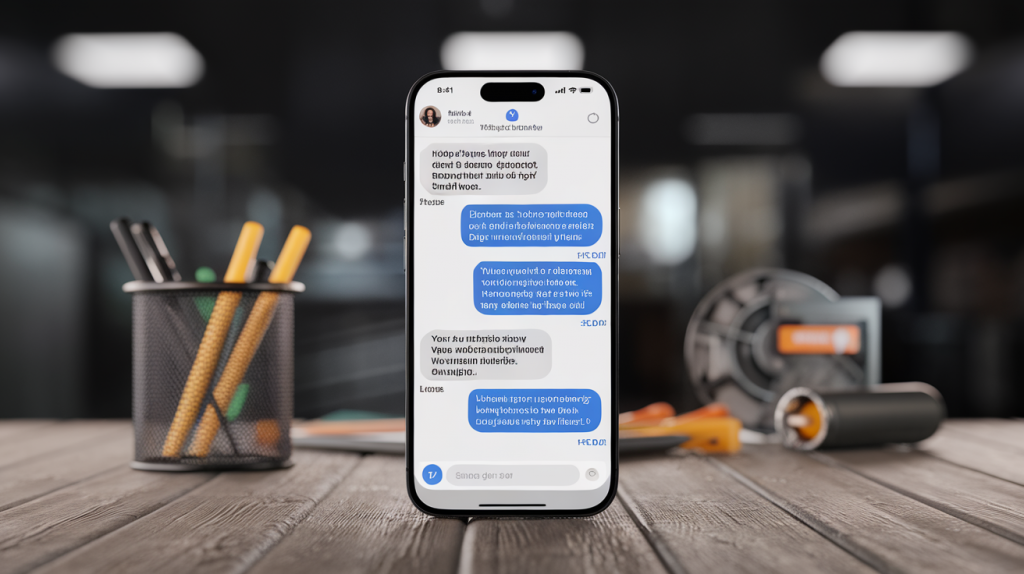
SMS cuts through digital noise like nothing else. 95% of SMS messages are read within 3 minutes compared to hours or days for email. When you’re trying to re-engage someone who’s been ignoring you, speed of visibility creates urgency.
But raw SMS isn’t enough. Conversational AI adapts messaging based on lead behavior, previous interactions, and response patterns. The system learns which opening lines work for different industries, which value propositions resonate with specific roles, and how to adjust tone based on engagement history.
The scale advantage is transformative. While a sales rep might manually follow up with 20-30 dead leads per week, AI SMS can process thousands daily with personalized messaging that feels human. SMS achieves 29% conversion rates vs. 15% for email in B2B contexts because it combines high visibility with conversational intimacy.
Step 1: Audit and Segment Your Dead Lead Database
Define Your Dead Lead Criteria
Not all dead leads are created equal. Time-based segmentation reveals revival potential:
- 30-60 days dormant: High revival potential. Recent enough that your brand is still familiar, but enough time has passed for circumstances to change.
- 60-90 days dormant: Medium potential. Requires stronger value proposition and acknowledgment of the gap.
- 90+ days dormant: Lower potential but still valuable. These leads need relationship rebuilding before any sales conversation.
Engagement level classification matters more than age:
- Never contacted: Highest potential. These leads showed interest but slipped through manual follow-up cracks.
- Partially engaged: Opened emails or clicked links but never responded. They’re aware but not convinced.
- Went dark mid-funnel: Had sales conversations then disappeared. Requires different messaging approach.
Lead source influences revival strategy. Inbound leads (content downloads, webinar attendees) have higher revival rates than cold outbound prospects. Event leads often revive well because they met your team face-to-face. Paid ad leads need more nurturing because their initial interest was lower-intent.
Score and Prioritize Based on Revival Potential
Firmographic fit still matters. Has the company grown or changed since initial contact? Are they still in your target market? Use LinkedIn and company websites to verify current status before investing revival effort.
Historical engagement signals predict revival success:
- Previous email opens indicate ongoing interest
- Content downloads show continued pain point relevance
- Demo requests suggest budget and authority alignment
- Social media engagement reveals active decision-making process
Buying cycle timing creates opportunities. B2B purchases often happen 6-18 months after initial research. A lead that went cold in January might be ready to buy in July. Create tiered segments: High-priority (strong fit + recent engagement), Medium (good fit + older), Low (poor fit or very old).
Clean Your Data Before Launch
- Phone number validation is critical. Use tools like ZeroBounce or NeverBounce to verify mobile numbers and reduce bounce rates. Invalid numbers damage sender reputation and waste messaging credits.
- Update contact information using LinkedIn Sales Navigator, ZoomInfo, or manual research. Job changes are common that VP of Sales might now be a Chief Revenue Officer at a different company.
- Remove hard bounces and unsubscribes to maintain list hygiene and TCPA compliance. Document opt-out requests with timestamps and source information.
- Consent status documentation protects against legal risk. B2B SMS requires express consent in many jurisdictions. If you can’t prove consent, don’t message that lead.
Step 2: Build Your AI-Powered SMS Revival Framework
Craft Messaging That Acknowledges the Gap
- Opening hooks that work: “Hi [Name], we connected [X months] ago about [specific topic]…” This acknowledges the time gap without being apologetic. It shows you remember the previous interaction and value the relationship.
- Value-first approach beats sales pitches. Lead with industry insights, relevant case studies, or trend analysis. Instead of “Are you still interested in our software?” try “Saw that [Company Industry] is dealing with [Specific Challenge]. We just helped [Similar Company] solve this exact problem…”
- Pattern interrupt language breaks through automation fatigue. Use conversational phrases like “Quick question…” or “Thought you’d find this interesting…” that sound human rather than robotic.
- Clear, low-friction CTAs drive response. Ask one simple question or offer one specific resource. “Worth a 10-minute conversation?” works better than “Let’s schedule a demo to discuss your needs and see if there’s mutual fit…”
Design Your Multi-Message Sequence
Message 1 (Day 0): Reconnection + value offer
“Hi [Name], we connected [X months] ago about [Topic]. Just saw [Relevant Industry News/Trend]. Reminded me of our conversation. Thought you’d find this case study interesting: [Link]. Worth a quick chat?”
Message 2 (Day 3-4): Social proof + specific outcome
“Hi [Name], companies like [Similar Company] are seeing [Specific Result] with [Solution Category]. Is [Original Pain Point] still a priority for [Company]?”
Message 3 (Day 7): Direct question about current priorities
“Quick question – what’s your biggest [Department] challenge heading into [Quarter/Year]? Might have some insights that help.”
Message 4 (Day 10-12): Final value-add + soft close
“If timing isn’t right for a conversation, no problem. Here’s a resource on [Topic] that might help: [Link]. Feel free to reach out if circumstances change.”
Timing prevents spam perception while maintaining momentum. Space messages 3-4 days apart to allow for response without appearing desperate.
Integrate AI Personalization Triggers
Dynamic field insertion goes beyond name and company. Include industry-specific pain points, role-relevant challenges, and previous interaction details. “As a [Title] in [Industry], you’re probably dealing with [Specific Challenge]…”
Behavioral branching routes leads based on response type:
- Positive response: Route to sales for immediate follow-up
- Neutral response: Continue nurture sequence with educational content
- Negative response: Pause sequence and tag for future re-engagement
Sentiment analysis helps AI detect interest level and adjust messaging tone. High-intent responses trigger urgent sales alerts. Low-intent responses continue automated nurture.
A/B testing at scale identifies winning message variants for each segment. AI learns which opening lines, value propositions, and CTAs perform best for different industries, company sizes, and roles.
Step 3: Navigate Compliance and Build Trust
TCPA and Consent Requirements for B2B SMS
- Express written consent is required for marketing messages to personal cell phones. Business numbers have more flexibility, but documenting consent protects against complaints.
- Lead source matters for compliance. Webinar registrations often include SMS opt-in language. Business card exchanges at events may constitute implied consent. Cold lists purchased from data brokers require express consent before messaging.
- Opt-out mechanisms must be clear and immediate. Every message needs “Reply STOP to unsubscribe” language. Process opt-outs within minutes, not hours.
- Record-keeping requirements include consent source, message history, opt-out requests, and response tracking. Maintain audit trails for legal protection.
Maintain Sender Reputation and Deliverability
- Start with small volumes to establish positive engagement patterns. Carriers monitor new senders for spam indicators. Begin with 50-100 messages daily and scale based on engagement rates.
- Monitor key metrics that affect sender reputation:
- Opt-out rates should stay below 2-3%
- Response rates above 15% indicate good targeting
- Spam reports above 1% damage reputation
- Use dedicated SMS numbers for revival campaigns. Separate these messages from transactional notifications to protect your primary business number.
- Partner with reputable SMS providers like Twilio, Bandwidth, or specialized platforms that maintain carrier relationships and compliance infrastructure.
Build Trust Through Transparency
- Identify your company clearly in the first message. No mystery numbers or vague sender names. “This is [Your Name] from [Company]” builds immediate trust.
- Respect communication preferences. If someone asks for email instead of SMS, honor that request immediately. Flexibility shows you’re human, not just automation.
- Provide value before asking. Don’t lead with “Are you still interested?” Lead with industry insights, helpful resources, or relevant case studies that demonstrate expertise.

Step 4: Execute Your Campaign with AI Automation
Set Up Your AI SMS Platform Integration
- CRM integration enables bidirectional data sync. When a lead responds via SMS, that engagement should update their CRM record, trigger sales alerts, and adjust lead scoring.
- Workflow triggers define campaign initiation. Common triggers include:
- Lead age (30+ days since last contact)
- Lead source (imported from specific list)
- Engagement score (dropped below threshold)
- Manual campaign assignment by sales rep
- Response routing connects AI SMS to your sales workflow. High-intent responses should create Slack alerts, CRM tasks, or email notifications for immediate follow-up.
- Fallback protocols handle edge cases. When AI can’t interpret a response, route it to human review rather than sending automated replies that might seem tone-deaf.
Launch with a Pilot Segment
- Test on 100-200 leads first to validate messaging, compliance processes, and response handling before scaling to thousands.
- Monitor the first 48 hours closely. Watch for:
- Deliverability issues (messages not reaching recipients)
- Unexpected opt-out volume (indicates messaging problems)
- Response quality (are replies positive or confused?)
- Technical problems (CRM sync failures, routing errors)
- Gather qualitative feedback from both leads and sales team. What are leads saying in their responses? Are sales reps getting qualified conversations or wasting time on low-intent inquiries?
- Iterate quickly based on pilot results. Adjust messaging, timing, or segmentation before full launch. Small changes in approach can dramatically improve results.
Scale Systematically Across Segments
- Prioritize high-potential segments to maximize early wins and build internal momentum. Success with your best leads creates buy-in for expansion to more challenging segments.
- Stagger launches to avoid overwhelming your sales team. If 30% of leads respond, suddenly routing hundreds of conversations to sales creates chaos rather than revenue.
- Maintain control groups by keeping 10-20% of each segment as non-contacted controls. This enables accurate ROI measurement and proves program effectiveness.
- Document learnings for repeatability. What messaging works for manufacturing vs. technology companies? How do response rates vary by company size? Build a knowledge base for future campaigns.
Step 5: Optimize Based on Real-Time Performance Data
Key Metrics to Track for Lead Revival Success
- Engagement rate measures initial success. Target 30-50% of leads responding in some way (positive, negative, or neutral). Lower rates indicate targeting or messaging problems.
- Qualified conversation rate separates genuine interest from polite responses. Track what percentage of responses indicate actual buying intent vs. courtesy replies or opt-out requests.
- Meeting/demo booking rate shows conversion from engagement to opportunity. This typically ranges from 5-15% of total engaged leads, depending on your sales process and offer.
- Revenue attribution proves ROI. Track closed-won deals from revived leads and compare to program costs. Include sales cycle length; revived leads often close faster because they’re already familiar with your solution.
- Time-to-response indicates intent level. Leads who reply within minutes show higher buying urgency than those who respond days later.
- Opt-out rate reflects message relevance and targeting accuracy. Rates above 3-5% suggest messaging is too aggressive or poorly targeted.
AI-Driven Optimization Opportunities
- Message variant testing at scale identifies winning combinations. AI can test hundreds of opening lines, value propositions, and CTAs simultaneously, learning which perform best for specific segments.
- Timing optimization uses machine learning to determine optimal send times for each lead based on their industry, role, and previous engagement patterns.
- Sentiment scoring flags high-intent responses for immediate sales attention while continuing to nurture neutral responses automatically.
- Predictive lead scoring re-evaluates leads based on SMS engagement behavior. A lead who responds quickly with detailed questions should be scored higher than one who gives short, polite replies.
When to Pause, Pivot, or Escalate
High opt-out rates (>5%) indicate messaging problems. The value proposition is either irrelevant or too aggressive. Pause the campaign and rework your approach.
Low engagement (<15%) suggests data quality issues, wrong segment targeting, or poor timing. Audit your lead criteria and messaging before continuing.
High engagement but low conversion points to sales handoff problems. Leads are interested but the follow-up process is broken. Fix routing and sales training before scaling.
Strong results across multiple segments indicate you’ve found a repeatable playbook. Document the winning approach and scale to additional segments systematically.

How JarvisCallback Automates This Entire Playbook for You
The Challenge of Manual Lead Revival at Scale
Most agencies recognize the opportunity in their dead lead databases but lack the bandwidth to execute revival systematically. Manual SMS outreach doesn’t scale. Sales reps can’t personalize hundreds of messages daily while maintaining quality and compliance.
Compliance risk multiplies with manual processes. Human error in opt-out handling, consent tracking, or message timing creates legal exposure that many agencies can’t afford.
Also, inconsistent follow-up kills results. When reps focus on hot opportunities, dead leads slip through cracks indefinitely. Without systematic automation, revival efforts remain sporadic and ineffective.
JarvisCallback’s AI SMS Solution for Dead Lead Revival
- JarvisCallback eliminates manual bottlenecks with intelligent automation that handles the entire revival process. The platform analyzes your CRM, identifies high-potential revival candidates, and executes personalized outreach sequences without human intervention.
- Automated lead segmentation uses AI to analyze firmographic data, engagement history, and buying signals to prioritize revival efforts. The system focuses on leads most likely to convert, maximizing ROI on messaging spend.
- Intelligent message sequencing deploys pre-built, TCPA-compliant templates with dynamic personalization that adapts based on industry, role, and previous interactions. Messages feel human while scaling to thousands of leads.
- Real-time response handling interprets replies using natural language processing, routing qualified leads to sales while handling opt-outs and neutral responses automatically. Sales teams only engage with high-intent conversations.
- Built-in compliance management includes automatic opt-out processing, consent tracking, and TCPA-compliant workflows that protect against legal risk while maintaining sender reputation.
- Omnichannel escalation moves engaged leads from SMS to phone or email based on their preferences and response patterns, creating seamless handoffs that maximize conversion rates.
Measurable Outcomes from JarvisCallback Customers
Agencies using JarvisCallback for dead lead revival typically see 30-50% engagement rates on previously dormant databases (10x better than email revival attempts).
- ROI materializes quickly: Most customers achieve 3-5x return on investment within the first 90 days as revived leads convert to meetings and deals.
- Sales efficiency improves dramatically with 80% reduction in manual follow-up time. Reps focus on qualified conversations rather than chasing unresponsive prospects.
- Compliance incidents drop to zero due to automated opt-out management and consent tracking that eliminates human error in legal requirements.
Measuring ROI: Prove the Value of Your Lead Revival Program
Calculate Your Dead Lead Opportunity Cost
Use this formula: (Number of dead leads) × (Average lead acquisition cost) × (Potential conversion rate if revived)
Example calculation: 5,000 dead leads × $100 acquisition cost × 5% revival conversion rate = $25,000 in recoverable revenue opportunity
Benchmark against new lead generation to show relative value. If reviving existing leads costs $20 per converted lead vs. $100 for new acquisition, the ROI case writes itself.
Track Revenue Attribution from Revived Leads
- Tag revived leads in your CRM with campaign source codes to ensure proper attribution when deals close. Many agencies discover their revival programs generate 15-25% of total revenue within six months.
- Compare lifecycle metrics between revived and new leads. Revived leads often close faster because they’re already familiar with your solution and have had time to develop urgency around their problems.
- Measure incremental revenue – what deals would have been lost without the revival program? This often exceeds the direct conversion numbers because revival programs also accelerate deals already in progress.
Build Your Business Case for Ongoing Investment
- Document cost savings from reduced need for paid lead generation. As revival programs scale, agencies often cut new acquisition spending by 20-40% while maintaining pipeline growth.
- Show efficiency gains in sales productivity. When reps spend time on engaged, qualified leads rather than cold prospects, conversion rates and deal sizes typically improve.
- Demonstrate scalability advantages. As your lead database grows, the revival program becomes increasingly valuable. A system that works on 5,000 leads scales to 50,000 with minimal additional cost.
- Present data-driven results to leadership using metrics like cost per revived lead, conversion rates, and revenue attribution. Use these numbers to justify expanded investment in AI SMS infrastructure and additional automation tools.

Common Pitfalls and How to Avoid Them
Mistake #1: Treating Dead Leads Like Fresh Prospects
The problem: Using the same aggressive sales messaging that failed during initial outreach. Dead leads went cold for a reason. Repeating the same approach guarantees the same result.
The solution: Acknowledge the time gap, lead with value, and rebuild trust before requesting meetings. “Hi [Name], we connected six months ago about [Topic]. Circumstances change, so thought I’d check in…” works better than diving straight into sales mode.
Mistake #2: Ignoring Compliance and Consent
The problem: Sending SMS to leads without proper consent documentation creates legal liability under TCPA regulations. Fines can reach $1,500 per unauthorized message.
The solution: Audit consent status before launching any SMS campaign. Work with legal counsel to establish compliant processes. When in doubt, get express written consent before messaging.
Mistake #3: Overwhelming Sales with Unqualified Responses
The problem: Routing every SMS reply to sales, including low-intent responses like “Thanks for the info” or “Not interested right now.” This wastes sales time and creates negative feedback loops.
The solution: Use AI to qualify responses before human handoff. Only route conversations that indicate genuine buying interest, timeline, or specific questions about your solution.
Mistake #4: Launching Without Testing
The problem: Scaling bad messaging to your entire database before validating effectiveness. Poor messaging can damage relationships and sender reputation permanently.
The solution: Always pilot with 100-200 leads first. Test messaging, timing, and response handling. Gather feedback from both leads and sales team before scaling to larger segments.
Mistake #5: Giving Up Too Early
The problem: Expecting immediate results and abandoning the program after one week of low engagement. Lead revival is a process, not an event.
The solution: Plan for 30-60 day optimization cycles. Track leading indicators like open rates and response quality while optimizing messaging and targeting. Results compound over time as AI learns and improves.
Conclusion
Your dead lead database represents a competitive advantage that most agencies ignore. While competitors chase expensive new prospects, you can revive existing leads who already know your brand and understand your value proposition.
AI SMS makes revival economically viable by combining the visibility of SMS (98% open rates) with the personalization of human outreach and the scale of automation. What was impossible to execute manually is now profitable and repeatable.
The strategic advantage compounds over time. As you build a systematic revival process, you create a competitive moat. Your cost per lead decreases while competitors’ acquisition costs continue rising. You maximize ROI on existing investments while they chase diminishing returns on new spend.
The playbook is proven: Segment your database by revival potential, craft value-first messaging that acknowledges the relationship gap, deploy AI automation for scale and compliance, measure engagement and conversion metrics, then optimize based on real performance data.
Start small with a pilot segment of 100-200 high-potential leads. Prove ROI within 30 days, then scale systematically across your entire database. The leads are already there. The technology exists. The only question is whether you’ll act before your competitors discover this opportunity.
Ready to turn your dead leads into a revenue engine? JarvisCallback‘s AI SMS platform automates this entire playbook, delivering 30-50% engagement rates on dormant leads with zero compliance risk. The best part? You only pay for results – when leads respond and convert to qualified opportunities.