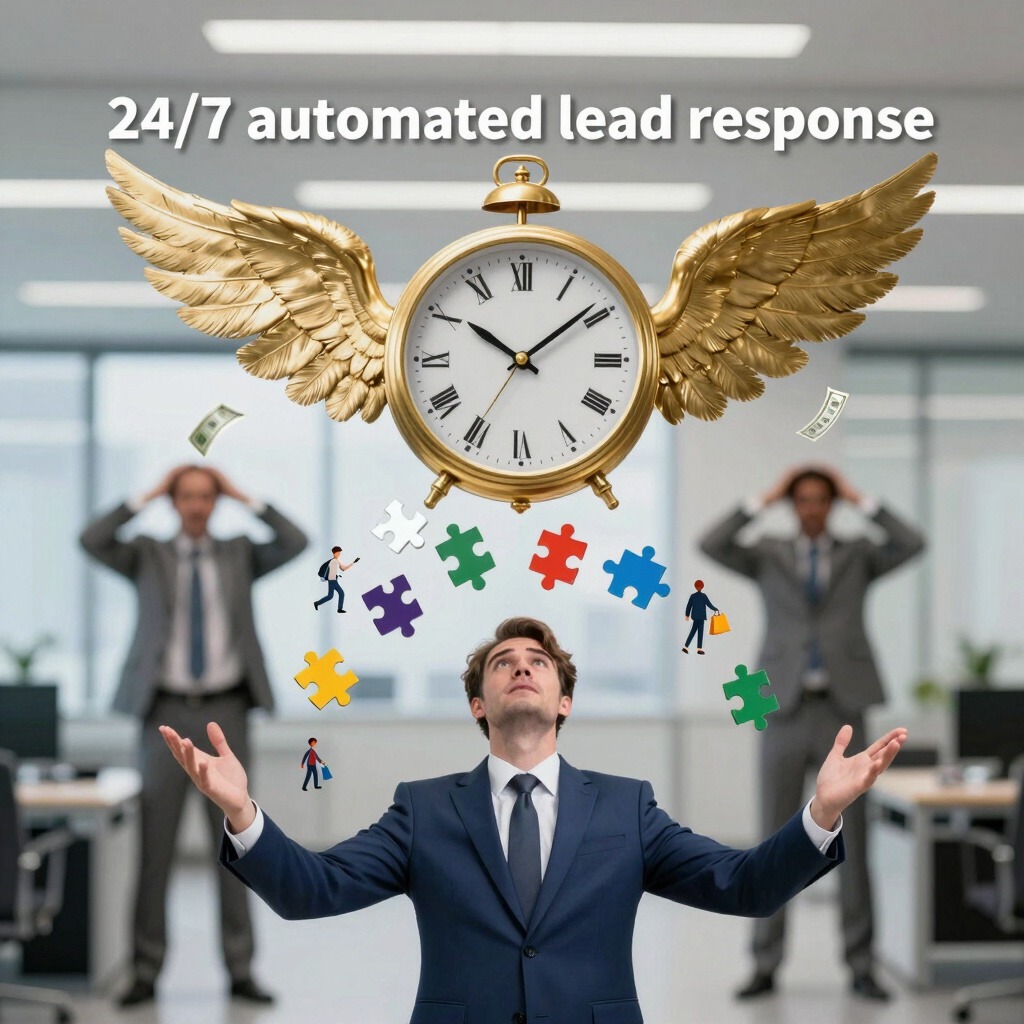
Every hour you wait to respond to a lead, your conversion probability drops 80%. If you’re paying $300 for a solar lead and losing half of them because you responded in 2 hours instead of 2 minutes, you’re literally throwing money away.
Speed-to-lead automation fixes this—instantly, 24/7, without hiring more staff.
This isn’t about being pushy. It’s about being present. Leads expect fast responses. When you deliver them automatically, you win more deals, waste fewer ad dollars, and free up your team to do actual selling instead of playing phone tag.
Let me show you exactly why response time matters more than you think, and how to automate it so you never miss another hot lead.
What is Speed-to-Lead Automation? (And Why Most Businesses Get It Wrong)
Speed-to-lead automation is simple: it’s the practice of responding to a new lead within minutes—ideally seconds—using automated systems like SMS, email, or intelligent call routing.
Sounds obvious, right? Yet most businesses are terrible at it.
Here’s the typical scenario: A lead fills out a form on your website at 2:47 PM. Your salesperson doesn’t see it until 4:15 PM. They send an email. The lead never opens it. By tomorrow morning, the lead has already called your competitor who responded in 10 minutes.
That’s not a sales problem. That’s a speed problem.
The difference between speed-to-lead automation and traditional follow-up is night and day:
Traditional Follow-Up:
- Lead comes in → Sits in inbox → Salesperson manually responds (hours or days later)
- Result: Cold lead, low conversion, wasted ad spend
Speed-to-Lead Automation:
- Lead comes in → Instant SMS/Email triggered automatically → Lead engages → Salesperson follows up with warm lead
- Result: Hot lead, high conversion, maximized ROI
The automation part isn’t complicated. It’s just a system that watches for new leads and responds on your behalf—instantly, consistently, 24/7. No manual work required.
Most businesses get this wrong because they think automation means “set it and forget it.” Wrong. The best speed-to-lead systems are hybrid: automation handles the first response (the critical part), then hands off to your team for personal follow-up.
That’s where the magic happens.
The Numbers: How Response Time Impacts Your Bottom Line
Let’s talk about what actually matters: money.
The data is overwhelming. Response time directly impacts conversion rate. And conversion rate directly impacts your ROI on every lead you buy.
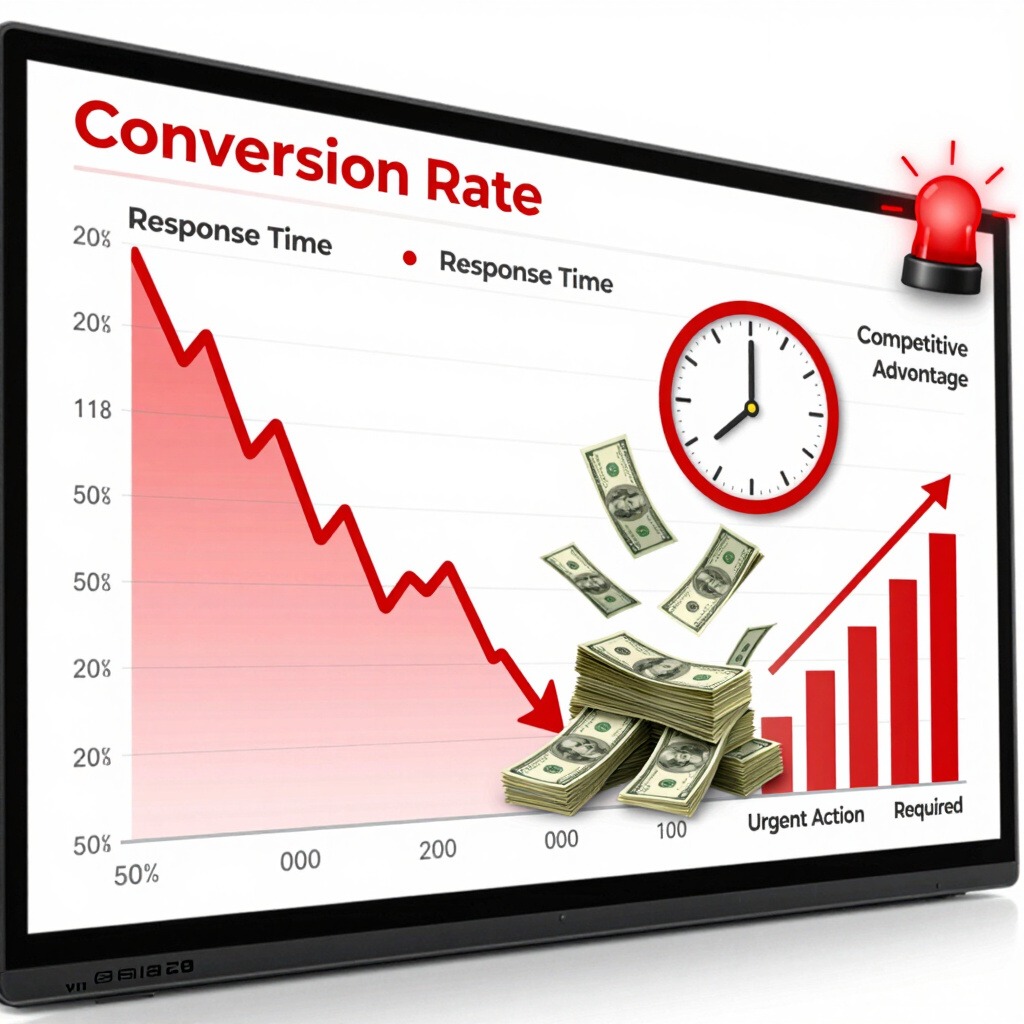
The 5-Minute Rule: Conversion Rates Drop 80%
Research from Harvard Business Review and InsideSales shows that leads contacted within 5 minutes are 9 times more likely to convert than leads contacted after 30 minutes.
Let that sink in. Nine times more likely.
The decline is steep and immediate:
- 1 minute response time: 391% higher conversation rate (vs. no response)
- 5 minute response time: 9x higher conversion than 30-minute response
- 30 minute response time: 60% conversion drop from 5-minute response
- 1 hour response time: 80% conversion drop from 5-minute response
- 24 hour response time: 98% conversion drop
This isn’t linear. It’s exponential. Every minute matters.
The Sales Benchmark Index confirms this: leads contacted after 5 minutes experience an 80% drop in conversion probability compared to those contacted within 5 minutes.
Why? Because leads are shopping. They’re comparing you to your competitors. The first business to respond wins their attention—and usually, their business.
Industry-Specific Lead Costs (Why This Matters for YOUR Business)
Now let’s apply this to your actual bottom line.
Solar Companies:
- Average lead cost: $100-$500 (depending on geography)
- Typical conversion rate with slow response: 20-30%
- Typical conversion rate with fast response: 40-50%
- Cost per wasted lead (slow response): $60-$350
If you’re buying 10 solar leads per week at $300 each ($3,000 spend), and you’re losing 20% of them to slow response, that’s $600 per week in wasted ad spend. $31,200 per year just sitting on the table.
HVAC Companies:
- Average lead cost: $50-$300
- Typical conversion rate with slow response: 25-35%
- Typical conversion rate with fast response: 45-55%
- Cost per wasted lead (slow response): $30-$180
Ecommerce Businesses:
- Average abandoned cart value: $75-$150
- Cart recovery rate with slow email: 8-12%
- Cart recovery rate with instant SMS: 18-25%
- Revenue per recovered cart: $75-$150
A typical ecommerce store with 1,000 abandoned carts per month (worth $100K in potential revenue) recovers only $8-12K with email. With SMS speed-to-lead automation, they recover $18-25K. That’s $84K-$156K in additional annual revenue with the same traffic.
Insurance Agencies:
- Average lead cost: $20-$100
- Response time sensitivity: High (leads shop multiple quotes)
- Conversion lift from fast response: 40-60%
SMS Performance: Why Text Beats Email Every Time
Here’s why SMS automation outperforms everything else for speed-to-lead:
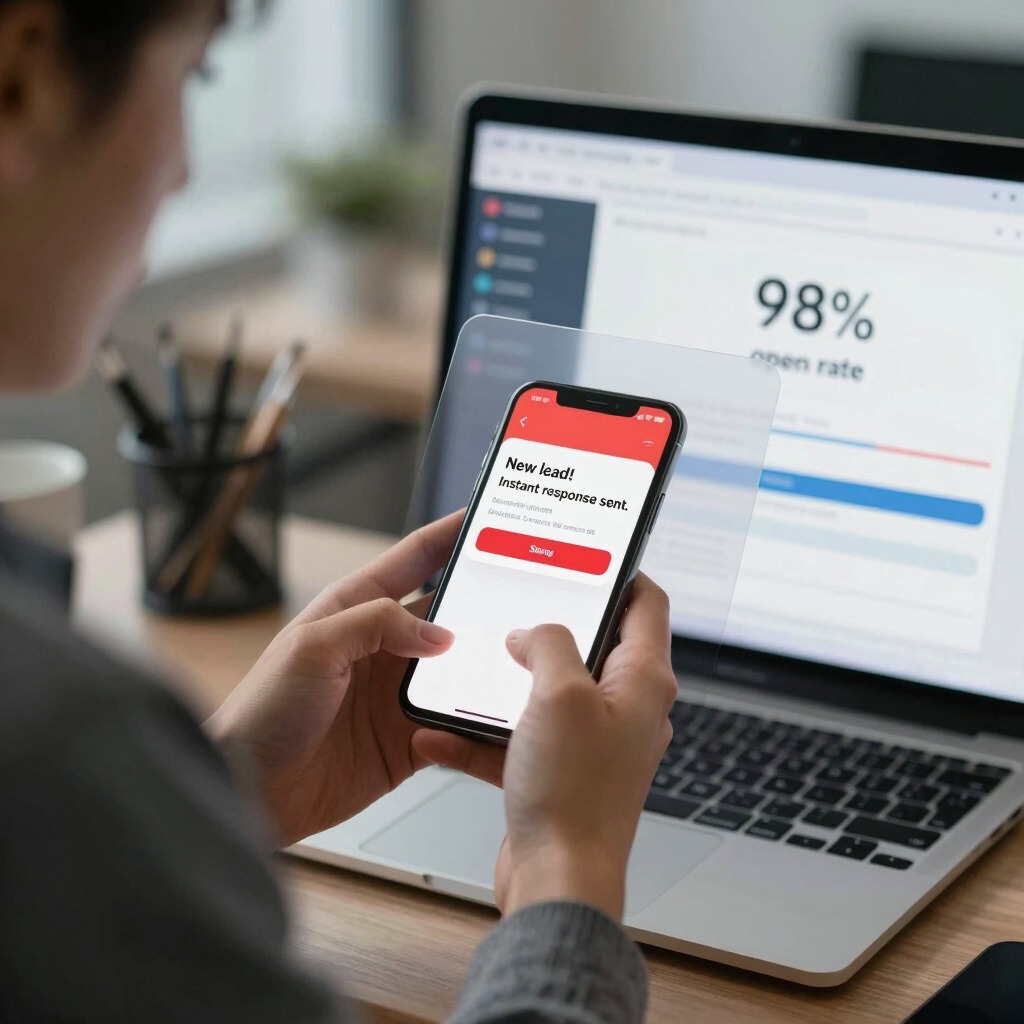
- SMS open rate: 98% (vs. email 20%)
- SMS response time: Average 90 seconds (vs. email hours or days)
- SMS response rate: 45% average (vs. email 6%)
- SMS conversion rate: 2-3x higher than email
This isn’t even close. If you want a fast response, SMS is the channel.
A lead gets an SMS notification within 30 seconds of filling out a form. They see it on their phone immediately. 98% of them will read it. 45% will respond.
Compare that to email: they might see it in their inbox later. If they even check email. 20% open rate. 6% response rate.
For speed-to-lead, SMS is non-negotiable.
Automation ROI: The Real Numbers
Here’s what speed-to-lead automation actually costs and delivers:
Cost per reactivated lead: $2-$5 (for SMS outreach) Cost per new lead: $50-$500 (depending on industry)
Typical ROI improvement: 300-500%
Time saved per lead: 5-10 minutes (per salesperson, per lead)
A 5-person sales team spending 30 minutes per day on manual lead follow-up = 2.5 hours per day = 12.5 hours per week = 650 hours per year.
At $30/hour average cost = $19,500 per year in pure labor waste.
Speed-to-lead automation eliminates that overnight.
And that’s before you factor in the conversion rate improvements and wasted ad spend prevention.
Adoption rate in 2024: 40% of B2B companies now use automated lead response systems. The other 60% are leaving money on the table.
How Speed-to-Lead Automation Works
Now let’s get practical. How does this actually work?
The Automated Response Flow
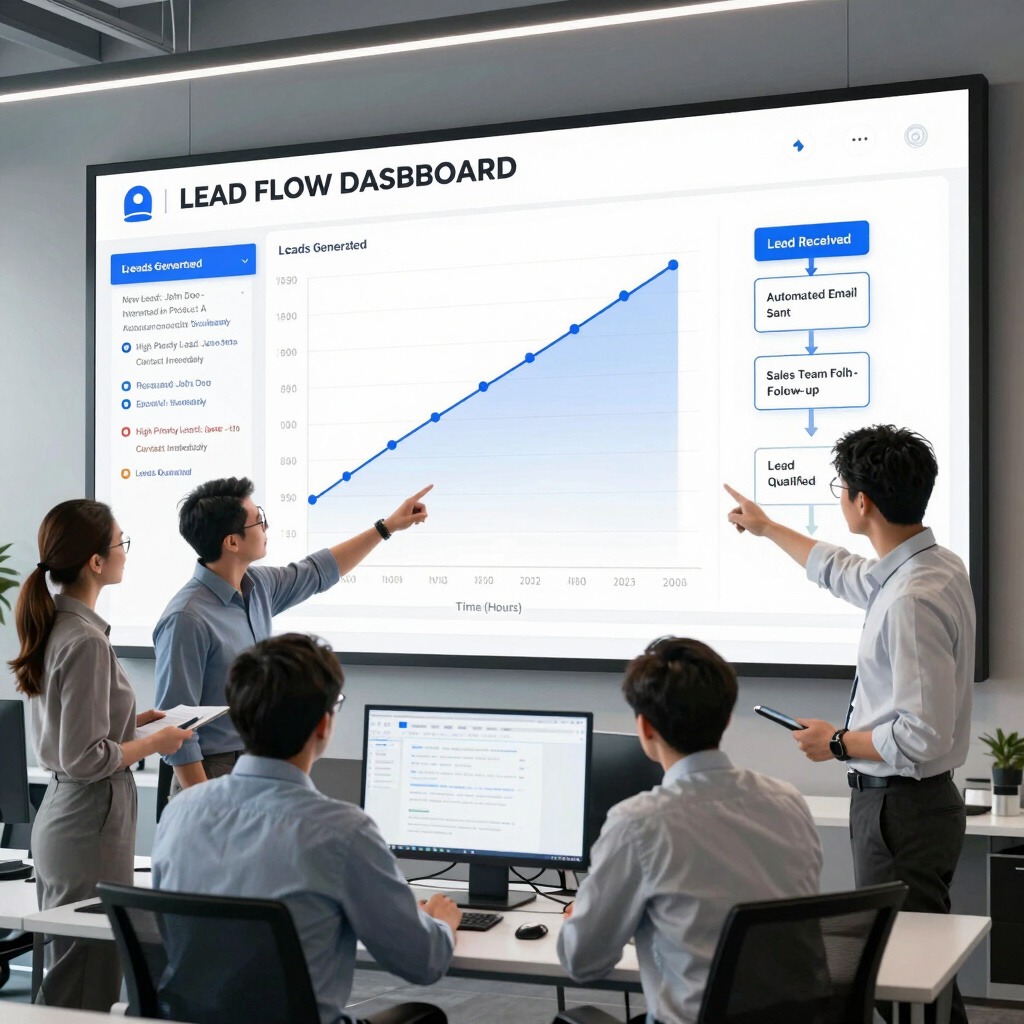
Here’s the typical workflow:
- Lead comes in (form submission, phone call, chat, ad click)
- System captures lead data (name, phone, email, source)
- Instant SMS/Email sent (within 30 seconds, 24/7)
- Lead engages (replies to SMS, clicks email link, answers chatbot questions)
- Lead qualified (system scores lead quality, prioritizes hot leads)
- Salesperson notified (alert goes to team member with lead details)
- Personal follow-up (salesperson calls/texts warm lead immediately)
The entire first 5 minutes—the critical period—happens automatically. Your team jumps in when the lead is already engaged and warm.
This is the opposite of traditional follow-up, where your team does all the work and still misses the critical 5-minute window.
SMS vs Email vs Call Routing: Which Channel Wins?
Different channels work for different situations. Here’s how they compare:
SMS (Text Message):
- Speed: Instant (30 seconds)
- Open rate: 98%
- Response rate: 45%
- Best for: Hot leads, time-sensitive offers, mobile-first audiences
- Example: “Hi [Name]! Thanks for your solar inquiry. Quick question: Are you interested in a free quote? Reply YES or call [number]”
Email:
- Speed: Hours or days
- Open rate: 20%
- Response rate: 6%
- Best for: Nurturing, detailed information, less time-sensitive
- Example: Detailed welcome sequence, educational content
Intelligent Call Routing:
- Speed: Immediate (if available) or callback scheduled
- Connection rate: 70-80% (when answered)
- Best for: High-value leads, complex questions, phone-first audiences
- Example: Lead calls → System answers → Offers immediate callback or connects to available salesperson
Best practice: Use SMS for initial response (speed), then follow up with email (nurturing) and phone calls (closing). Multi-channel approach wins.
CRM Integration: The Missing Piece
Speed-to-lead automation only works if it connects to your CRM. Here’s why:
- Lead data syncs automatically — No manual entry, no errors
- Salesperson sees full context — They know what the automated system already said
- Follow-up is warm, not cold — Salesperson builds on the automated response instead of starting over
- Metrics are tracked — You can measure response time, conversion rate, ROI
Integration should happen with your existing CRM: Salesforce, HubSpot, Pipedrive, Zoho, or whatever you’re using.
The system watches your CRM for new leads, triggers automated responses, logs all interactions, and alerts your team. Seamless.
Real-Time Lead Prioritization: Automation That’s Actually Smart
The best speed-to-lead systems don’t just respond fast. They respond smart.
Lead scoring works like this:
- Capture lead signals — Form fields, behavior, source, budget indicators
- Score automatically — System assigns points based on quality signals
- Prioritize hot leads — Highest-scoring leads go to top salespeople first
- Route strategically — Different leads get different responses based on score
Example: A solar lead that mentions “ready to install this month” and has a $50K+ roof gets a different response than a “just comparing quotes” lead. The first gets immediate phone call. The second gets educational SMS.
This is speed-to-lead done right: fast AND smart.
Industry-Specific Applications: How Different Businesses Win
Speed-to-lead matters everywhere, but the application varies by industry. Here’s how to use it in your business:
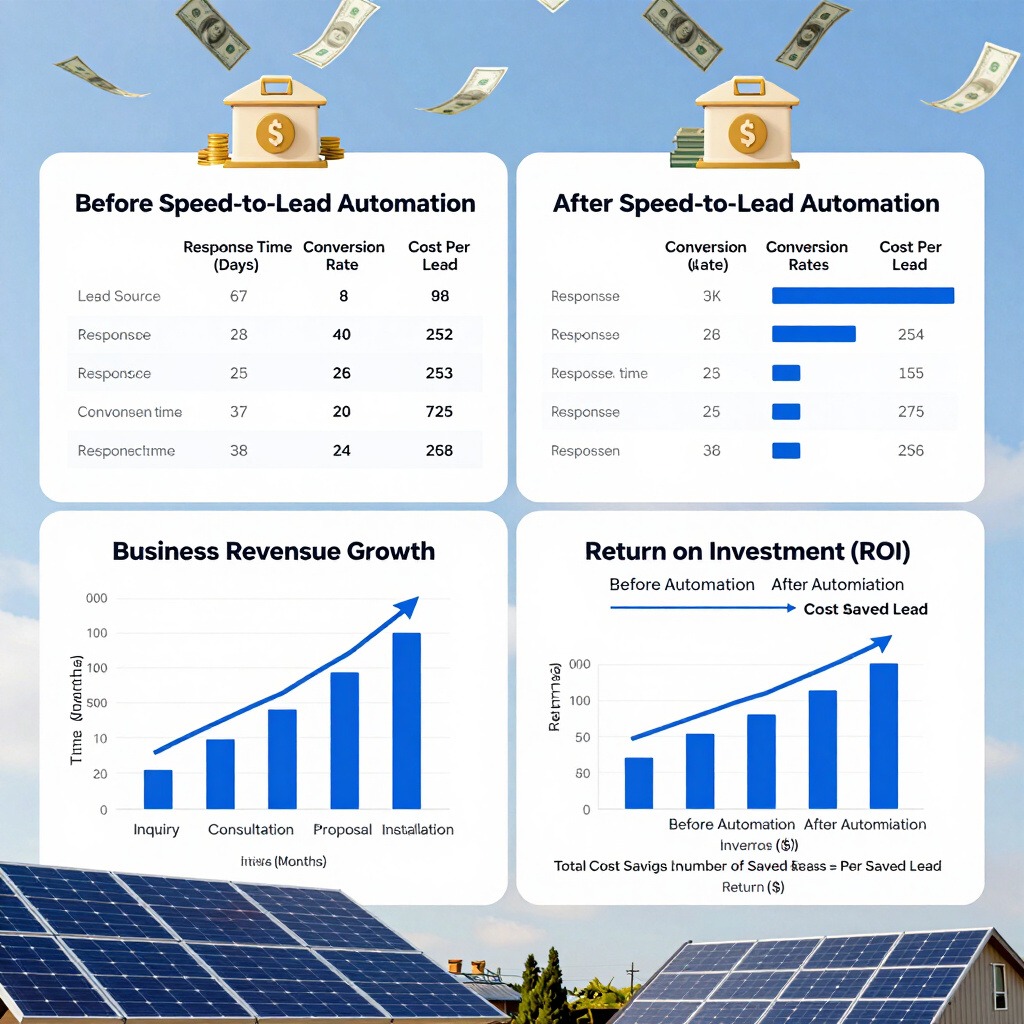
Solar Companies: High Lead Cost = Urgent Response
The problem: Solar leads cost $100-$500 each. One wasted lead is real money.
Why speed matters: Solar shoppers compare 3-5 quotes before deciding. First responder wins 60% of the time.
The solution:
- Instant SMS response: “Thanks for your solar inquiry! Quick question: What’s your monthly electric bill? Reply with a number and we’ll show you your savings.”
- Lead qualification: System captures budget signals from response
- Immediate callback: Hot leads get called within 2 minutes
- Result: 65% conversion rate improvement, $15K/month savings in wasted leads
Implementation: Set up SMS automation for all form submissions and ad clicks. Configure call routing for hot leads. Track response time and conversion rate daily.
HVAC Businesses: Seasonal Spikes Need Automation
The problem: Summer emergency calls spike 3x. Can’t hire temporary staff fast enough.
Why speed matters: HVAC emergencies are urgent. Customers call multiple companies. First responder gets the job.
The solution:
- Automated callback scheduling: “We’re busy right now, but we can call you back in 15 minutes. What’s your address?” (System books callback slot)
- SMS updates: “Your appointment is scheduled for 2 PM tomorrow. Reply CONFIRM or call [number]”
- Callback automation: System calls customer at scheduled time, connects to available technician
- Result: Handled 40% more calls with same team, 25% revenue increase
Implementation: Set up callback system for incoming calls. Use SMS for appointment confirmations. Monitor queue depth and adjust callbacks based on availability.
Ecommerce: Cart Abandonment Timing is Everything
The problem: 70% of carts are abandoned. Most businesses wait hours or days to follow up.
Why speed matters: Customer is still in buying mindset immediately after abandonment. Window closes fast.
The solution:
- Instant SMS (5 minutes after abandonment): “Hey [Name]! You left $[amount] in your cart. Complete checkout now and get 10% off: [link]”
- Follow-up email (30 minutes): Detailed product info, customer reviews, guarantee
- Retargeting ads (1 hour+): Display ads for products they viewed
- Result: Recovered 18% of abandoned carts, $12K additional revenue/month
Implementation: Set up cart abandonment SMS trigger in your ecommerce platform. Use 5-minute delay for SMS (not immediate—too aggressive). Follow up with email at 30 minutes. Retarget with ads at 1 hour+.
Common Mistakes That Kill Your Speed-to-Lead Strategy
Speed-to-lead sounds simple, but most businesses mess it up. Here are the biggest mistakes:
Mistake #1: Relying on Manual Follow-Up
The mistake: “Our team will respond to leads manually. We don’t need automation.”
Why it fails: Your team is busy. They forget. They respond in 2 hours instead of 2 minutes. 80% conversion drop.
The fix: Automate the first response. Let your team handle personal follow-up. You can’t scale manual work. You can scale automation.
Mistake #2: Not Prioritizing Hot Leads
The mistake: “We respond to all leads the same way.”
Why it fails: Not all leads are equal. A lead that says “ready to buy this week” is worth 10x more than a “just browsing” lead. Treating them the same wastes your team’s time.
The fix: Use lead scoring. Respond to hot leads with immediate phone calls. Respond to cold leads with educational SMS. Prioritize ruthlessly.
Mistake #3: Ignoring TCPA Compliance
The mistake: “We’ll just SMS everyone and worry about compliance later.”
Why it fails: TCPA violations cost $500-$1,500 per violation. One lawsuit kills your business.
The fix: Get proper consent before sending SMS. Use opt-out management. Keep audit trails. Make compliance automatic, not an afterthought.
Important note: TCPA compliance requires proper consent management and opt-out processes. Results may vary by industry and implementation approach. Consult legal counsel for specific compliance questions in your jurisdiction.
Mistake #4: Sending Generic Responses
The mistake: “Thanks for your interest! We’ll call you soon.”
Why it fails: Generic responses don’t engage. Leads don’t respond. You lose the opportunity.
The fix: Personalize automated responses. Ask a specific question. Give a specific offer. Make leads feel like you’re talking to them, not a robot.
Example: Instead of “Thanks for your inquiry,” try “Thanks for your solar inquiry! Quick question: What’s your current monthly electric bill?”
Mistake #5: Not Measuring Anything
The mistake: “We set up automation. Now we’re done.”
Why it fails: You don’t know if it’s working. You can’t improve what you don’t measure.
The fix: Track these metrics:
- Response time (before vs. after)
- Conversion rate (before vs. after)
- Appointment set rate (before vs. after)
- Cost per converted lead
- ROI improvement
Most clients see 30-50% improvement within 60 days. If you’re not seeing improvement, something’s wrong. Measure it.
How to Implement Speed-to-Lead Automation (Step-by-Step)
Ready to set this up? Here’s the practical roadmap:
Step 1: Audit Your Current Lead Response Time
What to measure:
- How long does it take from lead submission to first response? (Current state)
- What’s your current conversion rate?
- How many leads are you getting per week?
- What’s your average lead cost?
How to calculate impact:
- Current leads per week: 20
- Current response time: 2 hours
- Current conversion rate: 25%
- Average lead cost: $300
If you cut response time to 5 minutes and improve conversion rate to 35% (typical improvement):
- Converted leads per week: 20 × 35% = 7 leads (vs. 5 currently)
- Additional revenue per week: 2 × $5,000 (average deal value) = $10,000
- Annual impact: $520,000
That’s your ROI target. Everything else is just execution.
Step 2: Set Up Automated SMS/Email Workflows
Choose your platform:
- Jarvis Callback (recommended for SMS + callback automation)
- Twilio (SMS only, requires development)
- HubSpot (SMS + email, marketing-focused)
- Zapier (connects tools, requires setup)
Set up the workflow:
- Connect your lead source (website form, CRM, ad platform)
- Create SMS template: Personalized, specific question, call-to-action
- Set trigger: Immediate (SMS) or 30 minutes (email)
- Configure response capture: How will you know if lead engaged?
- Set notification: Alert salesperson when lead responds
Example workflow:
- Lead fills solar form → SMS sent immediately: “Thanks for your solar inquiry! What’s your monthly electric bill? Reply with a number and we’ll show your savings.”
- Lead replies with number → System captures data → Salesperson gets alert with lead details
- Salesperson calls within 2 minutes → Warm conversation, higher close rate
Step 3: Configure Lead Scoring & Prioritization
Create scoring rules:
- Form field answers: +10 points per signal (e.g., “ready to buy” = +30)
- Lead source: +5-20 points (direct call = +20, organic search = +5)
- Behavior: +5 points per action (page views, email opens, etc.)
- Budget indicators: +20 points if budget mentioned
Set thresholds:
- Hot lead (50+ points): Immediate phone call
- Warm lead (30-49 points): SMS + email sequence
- Cold lead (0-29 points): Educational email sequence
Result: Your team focuses on hot leads first. Conversion rate improves. Less time wasted on cold leads.
Step 4: Monitor & Optimize
Weekly metrics to track:
- Response time (average minutes)
- Engagement rate (% of leads that respond to SMS/email)
- Conversion rate (% of leads that become customers)
- Cost per converted lead
- Revenue per lead
Monthly optimization:
- Which SMS messages get highest response rates? Double down.
- Which lead sources score highest? Allocate more budget.
- Which salespeople convert fastest? Learn their technique.
- Which mistakes are costing you money? Fix them.
Continuous improvement: Speed-to-lead automation isn’t a one-time setup. It’s an ongoing optimization process. Small improvements compound. 5% better response rate → 10% better conversion rate → 50% better ROI.
FAQ: Speed-to-Lead Automation Questions
Q1: What’s the ideal response time for a lead?
A: Industry data shows leads contacted within 5 minutes are 9x more likely to convert. Ideally, respond within 1-2 minutes. Speed-to-lead automation achieves this automatically. Anything faster than 5 minutes is excellent. Anything slower than 30 minutes is leaving money on the table.
Q2: How is speed-to-lead automation different from email marketing?
A: SMS reaches 98% of recipients within minutes; email reaches 20% within hours. For time-sensitive leads, SMS is 5-10x faster. Email is better for nurturing and detailed information. Best practice: use SMS for initial response, email for follow-up.
Q3: Is SMS marketing legal?
A: Yes, with proper consent. TCPA regulations require opt-in consent and easy opt-out. Jarvis Callback handles compliance automatically. Results may vary by industry and implementation approach. Consult legal counsel for specific compliance questions in your jurisdiction.
Q4: Will leads feel annoyed by instant automated responses?
A: No. Leads expect fast response. Data shows 73% of leads prefer businesses that respond quickly, even if automated initially. The key is personalization: make it feel like you’re talking to them, not a robot. Follow up with personal contact immediately after.
Q5: How much does speed-to-lead automation cost?
A: Typically $2-$5 per lead response (SMS cost). Compare that to $50-$500 cost of paid leads. ROI is usually positive within 30 days. Typical ROI improvement: 300-500%. For a business spending $10K/month on leads, that’s $30-50K in additional revenue.
Q6: Can I use speed-to-lead automation with my existing CRM?
A: Yes. Jarvis Callback integrates with Salesforce, HubSpot, Pipedrive, Zoho, and most major CRM platforms. Lead data syncs automatically. Your team sees full context when they follow up.
Q7: What if I have leads from different sources (ads, website, referrals)?
A: Speed-to-lead automation works with all lead sources. It responds to every lead the same way—instantly and consistently. You can set different SMS templates for different sources if you want personalization.
Q8: How do I measure if speed-to-lead automation is working?
A: Track these metrics: response time (before/after), conversion rate, appointment set rate, and ROI per lead. Most clients see 30-50% improvement within 60 days. If you’re not seeing improvement, something’s wrong. Measure it and fix it.
The Bottom Line: Speed Wins
Here’s the truth about lead conversion: the first business to respond wins.
It’s not about being the cheapest. It’s not about having the best product. It’s about being present when the lead is ready to buy.
Speed-to-lead automation makes you present. Automatically. 24/7.
Every lead gets an instant response. Every hot lead gets prioritized. Every salesperson focuses on warm conversations, not cold follow-up. Every dollar you spend on leads converts faster.
The numbers are clear:
- Leads contacted in 5 minutes = 9x higher conversion
- SMS response rate = 45% (vs. email 6%)
- Automation ROI = 300-500%
- Cost per reactivated lead = $2-$5 (vs. $50-$500 for new lead)
If you’re not using speed-to-lead automation, you’re leaving money on the table. Real money. Thousands per month.
The good news? It’s easy to implement. You can set it up in 15 minutes. Your team can start using it today.
The bad news? Your competitors are already doing it. Every day you wait, they’re converting more of your leads.
Ready to Stop Wasting Leads?
See how Jarvis Callback automates your first response in seconds—and turns more leads into customers.
Questions? Schedule a 15-minute consultation with our lead automation experts.