Picture this: It’s 2 AM. You’re fast asleep. A hot lead just filled out your contact form.
And guess what? Your competition is already texting them back.
You know the drill. Leads pour in faster than you can handle them. Your inbox is screaming. Your phone won’t stop buzzing. You’ve got a list of 50 people who need a personal touch, but there’s only one of you (and honestly, you need a coffee break).
Here’s the brutal truth: 80% of sales require 5 to 12 follow-up attempts. But 44% of salespeople give up after just one try. One! That’s like asking someone to marry you, getting a “let me think about it,” and never calling them again.
The math doesn’t math.
Manual follow-up builds trust. Everyone knows that. But manual follow-up also requires you to clone yourself seven times, never sleep, and somehow remember to text Brian from Tuesday at exactly the right moment when he’s finally ready to buy.
So what’s the move?
Here’s the good news: You don’t have to choose between “robotic spam machine” and “exhausted human warrior.” There’s a third option. It’s called smart automated lead follow up that actually sounds like you.
This guide will show you exactly how to build a follow-up system that works around the clock but feels like you’re personally typing every single message. No cringe. No spam folders. Just real conversations that turn leads into customers while you catch up on sleep.
Table of Contents
What is Automated Lead Follow Up?
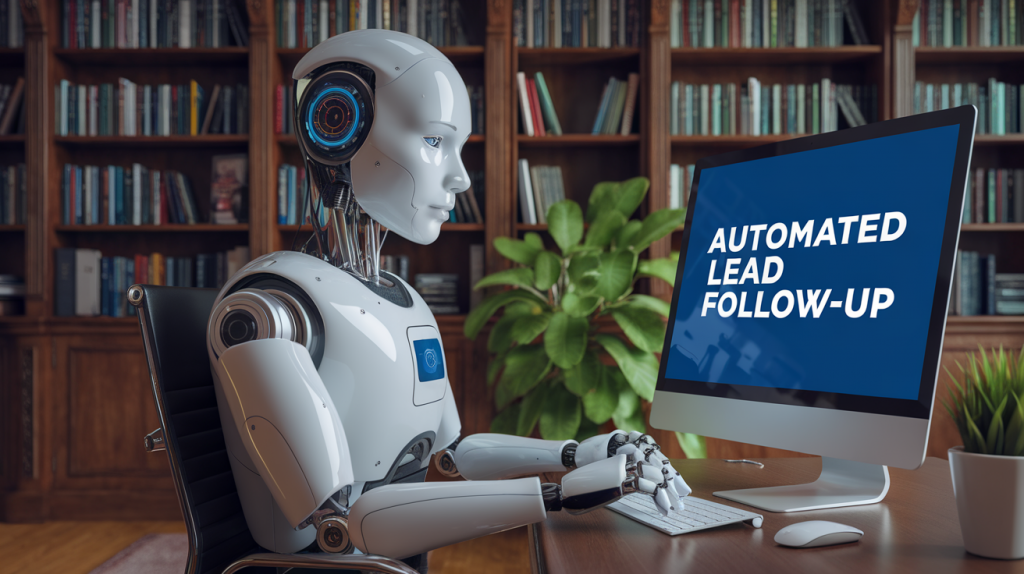
Automated lead follow up is a system that uses software, AI, and CRM triggers to manage communication with prospects after they express interest in your product or service. It sends timely, personalized messages across multiple touchpoints without manual intervention.
Real automated lead follow up is NOT just that sad little “Thanks for your submission!” email that lands in someone’s inbox and dies there. You know the one. Zero personality. Straight to the trash folder.
It’s way smarter than that.
Here’s what it actually covers:
- The instant “Hey, I got your message!” text that arrives in seconds
- The follow-up question two days later asking if they’re still interested
- The helpful resource you send a week after that
- The long-term nurture sequence that quietly stays in touch for months
According to InsideSales.com, 35-50% of sales go to the vendor who responds first. Automation makes sure you’re always first to the finish line.
But here’s the thing people get wrong: The goal is NOT to replace your sales team with robots.
The goal is to make sure no lead ever slips through the cracks while they’re still thinking about it. Automation holds the conversation until the lead is warm enough to talk to an actual human. That’s it. That’s the game.
The Top Benefits of Automating Your Lead Follow Up
Why should you automate your follow-up game? Let’s break down the wins.
1. Speed to Lead (AKA The 5-Minute Rule That Prints Money)
Here’s a stat that’ll make you rethink everything: Harvard Business Review found that companies contacting potential customers within an hour of receiving a query are nearly 7 times more likely to have a meaningful conversation with a key decision-maker.
Within an hour? That’s generous.
Automation hits back in zero minutes. Someone fills out your form at 11:47 PM on a Saturday? Boom. Instant reply. Your competitors are still sleeping. You just won.
2. Perfect Consistency (No Bad Days, No Excuses)
Let’s be real. Humans are incredible, but we’re also:
- Tired on Mondays
- Distracted by lunch plans
- Out sick with the flu
- Prone to forgetting that one lead from last Tuesday
Automation doesn’t have bad days. It doesn’t forget. It doesn’t get hangry. Every single lead gets the exact same platinum treatment, every single time. No favorites. No slip-ups.
3. Scalability (Because You Can’t Clone Yourself)
Your best sales rep can make maybe 50 quality calls a day. That’s impressive! That’s also a hard ceiling.
Automation? It can handle 5,000 leads in an hour without breaking a sweat. No coffee breaks. No bathroom runs. Just pure, relentless follow-up at scale.
4. Data-Driven Optimization (Test Everything, Improve Everything)
Want to know if “Hey, got a minute?” converts better than “Quick question for you”?
With automation, you can A/B test scripts, timing, and channels. You get hard data on what works. Try doing that with 10 different sales reps having improvised conversations. Good luck tracking that chaos.
Why “Robotic” Automation Kills Conversion Rates
Not all automation is created equal. Some of it? Pure poison for your conversions.
The “Uncanny Valley” of Sales
You know that email. The one that makes your skin crawl.
“Dear [First Name], I hope this email finds you well.”
Ugh. Nobody talks like that. It’s trying SO hard to sound human that it loops back around to creepy robot territory. It’s the sales equivalent of those CGI characters that look almost real but something’s just… off.
Your leads can smell fake personalization from a mile away. And when they do? Delete.
The “Blast” Mentality (AKA Spray and Pray)
Picture this: It’s 9:00 AM sharp on a Tuesday. Suddenly, 1,000 people get the exact same generic template in their inbox.
“We’re reaching out to discuss how our solution can transform your business!”
Which business? Who are you? Why should I care?
According to Salesforce, 79% of business buyers say it’s absolutely critical or very important to interact with a salesperson who is a trusted advisor. Mass blasts scream “I don’t know you and I don’t care.”
One-Way Communication (The Monologue Problem)
Bad automation talks AT you:
- “Buy our product!”
- “Schedule a demo!”
- “Limited time offer!”
Good automation talks WITH you:
- “What’s your biggest challenge right now?”
- “Are you dealing with X or Y?”
- “Does Thursday work for a quick chat?”
See the difference? One’s a billboard. The other’s a conversation.
The Consequence (Worse Than Being Ignored)
Robotic messages don’t just get deleted. They actively damage your brand. They trigger spam filters. They get you blocked. They make people think “Wow, this company doesn’t respect my time.”
You don’t get a second chance to make a first impression. Don’t waste it sounding like a bot.
The 3 Pillars of Human-Like Automation
So how do you make automated lead follow-up feel less “robot army” and more “helpful human”?
Three pillars. Master these and you’re golden.
Pillar 1: Contextual Relevance (Show You’re Actually Paying Attention)
Generic message: “Buy our product!”
Contextual message: “Hey Sarah, saw you downloaded our pricing guide for the Pro plan. Got questions about the features?”
Which one sounds like a real person?
Automation that references specific actions feels personal because it IS personal. It proves you’re tracking the journey. “I noticed you clicked X” or “You asked about Y last week” instantly separates you from the spam crowd.
Pillar 2: Conversational Channels (Meet Them Where They Text Their Friends)
Here’s the thing about email: It’s formal. Corporate. Stuffy.
Here’s the thing about texting: It’s where people talk to humans they actually like.
According to Gartner, SMS messages have a 98% open rate compared to email’s 20%. When you shift your automated lead follow-up to SMS or WhatsApp, the tone automatically feels more human. Why? Because nobody texts their friends like they’re writing a business proposal.
Short messages. Casual language. Quick back-and-forth. That’s how real conversations happen.
Pillar 3: Dynamic Responses (Actually Listen and Respond)
A robot sends a pre-written wall of text no matter what you say.
A human reads your reply and answers the actual question you asked.
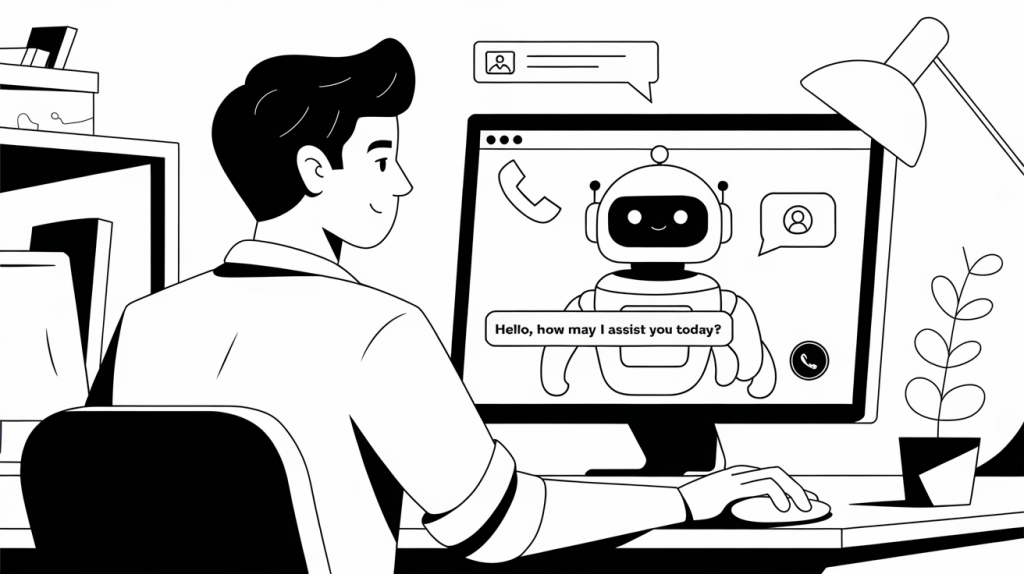
Advanced AI does the same thing. If someone texts back “How much does it cost?”, your system should answer that question, not blast them with your full company history. Dynamic responses adapt to the conversation in real time.
That’s the difference between talking AT someone and talking WITH them.
5 Strategies to Set Up Automated Follow-Up That Feels Real
Ready to build automated lead follow-up that doesn’t make people cringe? Here are five strategies that actually work.
Strategy 1: The “Speed to Lead” Rule (But Make It Natural)
Speed matters. We already know that. But there’s a catch.
If you send a perfectly polished marketing brochure exactly one second after someone fills out your form, it looks suspicious. Like you had it locked and loaded before they even clicked submit.
Instead, try this:
Send a short, casual SMS within a few minutes:
“Hey Jessica, just saw your request come through. Do you have 5 mins to chat?”
Fast? Yes. Natural? Also yes. It sounds like a real person who happened to catch the notification, not a robot lying in wait.
Strategy 2: Use “Imperfect” Language (Typos Optional, Personality Required)
Corporate bots love perfect grammar. Stiff sentences. Formal language that makes you sound like you’re testifying in court.
Humans? We use contractions. We write in lowercase sometimes. We keep it short.
The corporate bot says: “We would like to schedule a consultation at your earliest convenience.”
The human says: “Free for a quick call?”
See the difference? One’s a press release. The other’s a text you’d actually send to someone you know. Your automated lead follow-up should sound like the second one.
Strategy 3: Ask Open-Ended Questions (Start a Dialogue, Not a Sales Pitch)
Stop pushing links. Stop demanding demos. Start asking questions that invite real answers.
Bad automation: “Click here to schedule your free consultation now!”
Good automation: “Are you looking to solve X problem specifically, or are you just browsing for now?”
Open-ended questions do two things:
- They show you care about their actual needs
- They give you intel on where they are in the buying journey
Plus, people love talking about their problems. Give them the space to do it.
Strategy 4: The “Break-Up” Message (Reverse Psychology Works)
Here’s a wild move: If someone ghosts you after multiple follow-ups, send a polite breakup message.
Example: “Looks like you’re super busy, so I’ll cross this off my list for now. Let me know if you ever want to pick this back up.”
Why does this work? Because it’s NOT pushy. It respects their time. And psychologically, it flips the script. Suddenly they’re the one deciding whether to re-engage, not you chasing them down like a telemarketer.
Fun fact: Break-up emails often get the highest response rates (33%) of any message in a sequence.
Strategy 5: Know When to Hand Over to a Human (Automation Has Limits)
Here’s the golden rule of automated lead follow-up:
Automation handles the chase. Humans handle the close.
Your system should be smart enough to recognize buying signals:
- “Yes, I’m interested”
- “How much does it cost?”
- “Can we talk tomorrow?”
The moment you see those words? The AI stops. A notification goes out. A live sales rep takes over the conversation.
Set up triggers for handoff moments:
- Lead replies with pricing questions
- Lead agrees to a call
- Lead asks for more details
- Lead engagement score hits a certain threshold
Automation is incredible at keeping leads warm and engaged. But when it’s time to close the deal? That’s where your human touch seals it.
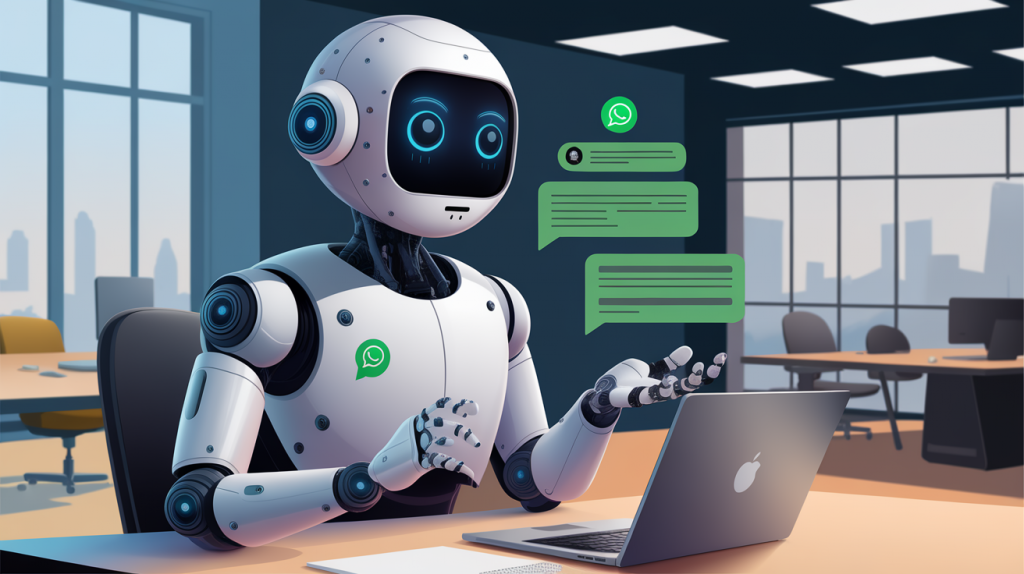
Best Channels for Automation: SMS vs. Email vs. WhatsApp
Picture this: You send a follow-up email. It lands in an inbox alongside 47 unread messages, three newsletters, and a Groupon the recipient forgot they signed up for.
Your carefully crafted message? Ignored.
Choosing the right channel is like picking the right party to crash. You want to show up where people actually want to hang out.
Email: The Reliable Workhorse
Email shines when you need space to breathe. Perfect for:
- Detailed proposals and contracts
- Rich content with multiple links
- Professional documentation
The catch? Only 20% of emails get opened. Your message is competing with spam, promotions, and that one college friend who won’t stop sending chain letters.
SMS: The Attention Grabber
Text messages boast a jaw-dropping 98% open rate. People read texts. Period.
Great for:
- Time-sensitive updates
- Appointment reminders
- Quick confirmations
But tread carefully. SMS compliance rules are stricter than a librarian at a rock concert. One wrong move and you’re facing hefty fines.
WhatsApp: The Personal Touch Champion
Here’s where magic happens. WhatsApp lives where people chat with friends and family. Your business message appears next to mom’s birthday plans.
You can send:
- Voice notes (actual human voice!)
- Images and videos
- Quick replies that feel conversational
It’s automation that doesn’t feel automated. And with 2 billion users worldwide, you’re meeting leads where they already are.

How JarvisCallback “Clones” Your Best Sales Rep
Remember Sarah from sales? The one who closes deals while making leads feel like old friends?
Now imagine having 100 Sarahs. All working simultaneously. Never taking lunch breaks. Never having bad days.
That’s the idea. Except better.
Not Your Average Chatbot
JarvisCallback doesn’t rely on clunky templates that scream “THIS IS A ROBOT TALKING.”
Those died in 2019. Good riddance.
Instead, the AI learned from millions of real conversations. It understands context. Picks up on intent. Responds like an actual human who’s genuinely interested in helping.
Think of it as your top performer’s brain, copied and pasted across every lead.
Why Our AI Has to Be Good
Here’s the kicker: We only get paid when leads convert.
If our AI sounds robotic? We don’t make money. You don’t get results. Everyone loses.
This performance-based model forces us to obsess over one thing: sounding human. Because fake conversations kill conversions faster than a typo in a marriage proposal.
The Three-Step Magic Trick
1. Ingest
Upload your leads. Cold prospects. Fresh inquiries. Website visitors. Whatever you’ve got.
2. Engage
The AI slides into their SMS or WhatsApp like a friend checking in. Natural conversation flows. Questions get answered. Interest gets gauged.
No “Dear Sir/Madam” nonsense. Just real talk.
3. Hand-off
The moment someone shows genuine interest? Boom. Instant connection to your actual team.
The AI detected buying signals. Your sales rep takes it home. Everybody wins.
It’s like having a tireless assistant who knows exactly when to pass the baton.
The Bottom Line: Automation That Actually Gives a Damn
Here’s the truth bomb: You don’t have to pick between speed and soul.
Automated lead follow-up isn’t about replacing humans. It’s about amplifying them.
Think about it. Your best sales rep can talk to maybe 20 leads a day. Our AI? Thousands. Same warmth. Same conversational flow. Zero burnout.
You become the business that responds in minutes, not days. The one that remembers details. The one that feels like it actually cares.
Because it does.
Your leads are real people with real problems. They deserve more than radio silence or robotic templates. They deserve responses that sound like a human typed them (because, well, an AI trained on millions of human conversations did).
Even at 3 AM. Even on holidays. Even when your entire team is binge-watching Netflix.
Ready to stop losing leads to slow follow-up?
Book a demo with JarvisCallback and watch your conversion rates climb while you sleep. We only win when you win. Let’s make that happen.
Frequently Asked Questions
Q: How many times should I follow up with a lead?
Five to seven times is the magic number.
Most salespeople give up after two attempts. That’s like leaving a party right when things get interesting.
Research shows the fifth follow-up often lands the meeting. But after seven? You’re entering stalker territory. Know when to move on.
Q: Is AI follow-up even legal?
Absolutely. As long as you play by the rules.
You need proper opt-ins. Simple as that. Someone filled out your form? You’re good. You bought a sketchy lead list from Craig on Facebook? Not good.
Always include an opt-out option. It’s the law, and honestly, it’s just decent human behavior.
Q: Can I actually automate voice notes?
Yes, and prepare to have your mind blown.
Voice notes are personalization on steroids. They sound human because they ARE human voices (AI-generated, but you’d never know).
Imagine a lead receiving a voice message that says their name, references their specific inquiry, and sounds like a friendly colleague checking in.
That’s not science fiction. That’s available right now.
It turns cold outreach into warm conversation. And warm conversations turn into closed deals.